
Home > News > Industry News
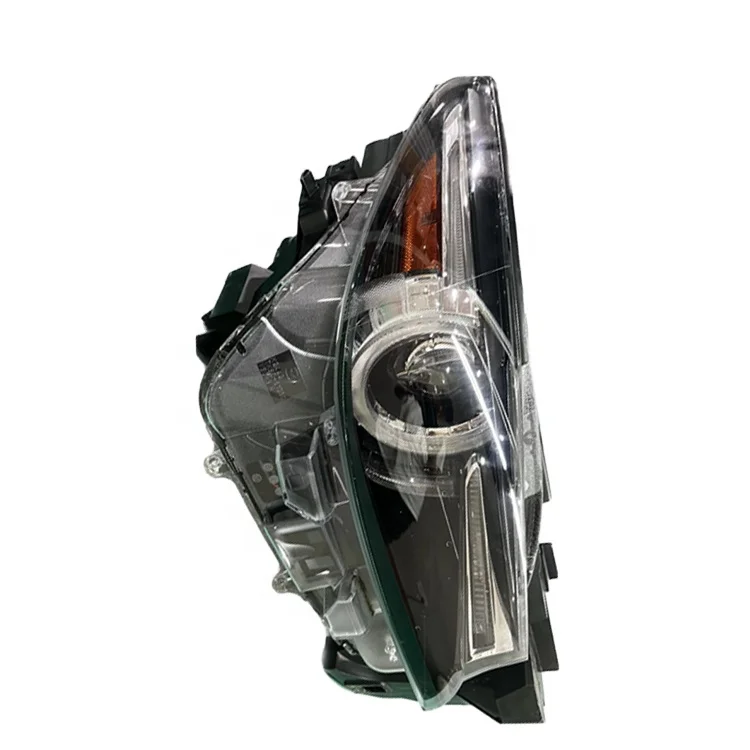
Headlight replacement orders start climbing in October and stay heavy through January. It's the most predictable seasonal window in exterior parts, and the one that catches buyers off guard — because by the time the shops call for the part, the stock is already gone. Here's what we've learned running a lighting line for 17 years, and when to place the order so you're not the one waiting.
Daylight is the trigger. By December, northern markets lose roughly two hours of evening light compared to September, and a big share of your customers' miles happens after dark. Drivers don't sit still with weak headlights once the sun goes down at 4:30.
The cold finishes the job. Halogen filaments hate thermal cycling — start in the morning frost, park, start again — and sockets corrode quietly while condensation sits inside the housing. Add fog and early snow, and the tolerance for a dim beam drops to zero. The result is a flood of jobs that were "fine in summer": yellowed lenses, drifting beams, flickering lamps, dead fog lights. Most of them walk in as something else first — a failed safety inspection, a used-vehicle warranty claim, or just a customer done with driving half-blind.
For a distributor, the number that matters is timing. The units that get sold in November are on the shelf because somebody ordered them in September.
Three checks cover most of it. Compare left and right beam output — one side dimmer than the other means the lamp or the circuit is days away from failing. Hold the lens up to daylight: yellowing or haze is cutting real output, and fog makes it worse. Check the aim on a wall at night; a drifted beam is a legal problem and a safety one.
Then look at the rest of the lighting circuit. Fog lights get used hardest in exactly the weather where they matter, and tail, brake, and signal lamps are the half of winter visibility nobody talks about. Full rear-lamp replacements consistently out-sell single bulbs this season. If you're stocking rear lighting, our tail lamp buying guide covers what to verify before you commit.
Shops that run this checklist in October turn routine service visits into full lighting orders. That's the order you need on the shelf.
Winter is the condition set where LED shows its advantage most clearly:
The gap isn't marginal: halogen output fades year over year while an LED assembly's curve stays flat, so on a dark winter road the difference a driver feels only grows as the halogen ages.
There's one nuance the spec sheets hide: 6,000K "ice white" LEDs scatter in fog and snow, so the brightest option isn't always the safest one. For winter markets, 4,300K–5,000K is the right default — warm enough to cut fog, bright enough to sell as an upgrade.
The full technical comparison is in our LED vs. halogen headlight guide, and when your customers are ready for a full assembly, the quality and compatibility checklist walks through sealing, canbus, and warranty terms.
Do the math: two to four weeks of production, then four to six weeks of ocean transit. A mid-October order is the last realistic date for shelf availability before the first cold week. November orders fight every other distributor for the same December shipping slots, and year-end freight surcharges are the rule, not the exception.
Factor in compliance too. EU-bound lighting needs E-mark approval (R113 for LED light sources), and North American buyers should confirm DOT/SAE J1363 conformity on bulb-type LEDs. That paperwork takes weeks, so it gets checked in September, not during the December rush. Popular trims get allocated first, and the long-tail SKUs — older platforms, regional variants — are the ones that run out and take weeks to come back.
Tell us your target markets and top trims and we'll map the SKUs, certifications, and shipping windows that fit. Contact KEBEL for the 2026–27 winter lighting catalog.
Daylight shrinks, cold and moisture stress aging halogen lamps, and fog and snow remove the margin for a dim beam. The jobs that were "fine in summer" get booked between October and January, which is why shop demand for lamps, assemblies, and fog lights climbs so fast in the same window.
They come up to full output instantly instead of dimming for seconds after a cold start, they draw less power from aging circuits, and they last far longer through daily freeze-thaw cycling. The one caveat: 4,300K–5,000K beats 6,000K in fog and snow, because it scatters less and actually helps the driver see.
September or October. Production plus ocean transit runs six to ten weeks, so that window is what gets stock on shelves before the November peak — with time left over for compliance checks on EU-bound units and for securing the trims you actually sell, before someone else takes the allocation.
 Hot News
2026-10-08
2026-09-29
2026-09-15
2026-09-08
2026-09-05
2026-08-27
Copyright © Yiwu Ronwin Import and Export Co., Ltd. All Rights Reserved - Privacy Policy
 EN
EN